
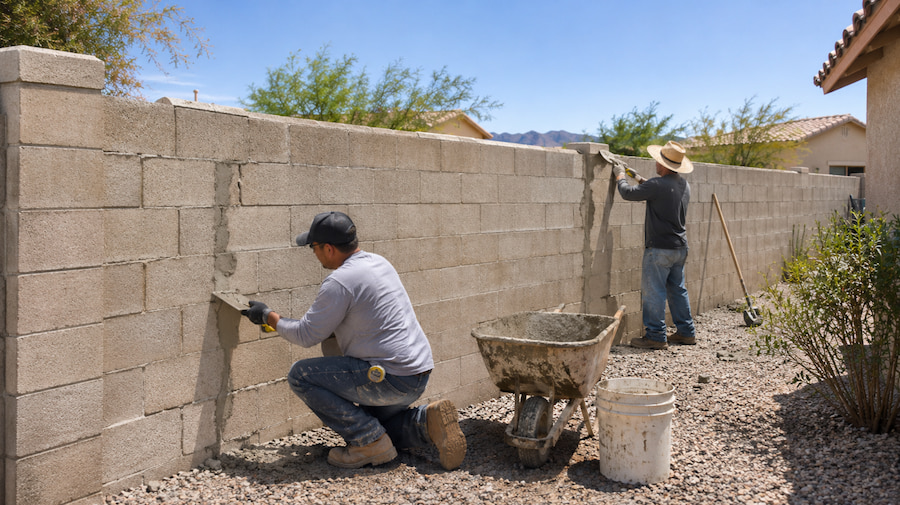
Block Wall Repair in Buckeye, Arizona That Restores Your Wall's Strength and Stability
Precision structural repairs for cracked, leaning, earthquake or impact-damaged concrete block walls. We stabilize foundations and restore masonry integrity across the West Valley.
Pricing Provided by Block Guys LLC
A damaged block wall is more than an eyesore. A crack or a lean is a warning sign that the structure underneath is failing. In Buckeye, the causes are usually the same. Desert soil moves with moisture. Older walls lack the rebar that modern walls have. Monsoon wind and water find every weak point. The good news is that most walls can be saved when the problem is caught early.
Buckeye Block Wall Contractors repairs block walls for homeowners and property owners across the West Valley. We start by figuring out why the wall failed in the first place. A crack is a symptom, not the disease. If we only patch the crack without fixing the footing or the drainage underneath, the wall will crack again. Our repairs address the root cause so the fix actually lasts.
We handle everything from hairline mortar cracks to walls leaning badly enough to be a safety hazard. We also rebuild sections shattered by vehicle impacts, often working with insurance adjusters. Every repair is done to the same structural standard we use on new construction, because a repaired wall should be as strong as a new one.
How Block Wall Repair Helps Prevent Common Property Problems
From emergency impact rebuilding to subtle stair-step crack stitching, our Buckeye masonry repair specialists diagnose underlying foundation failure before executing permanent structural repairs.
Every block wall repair project we take on in Buckeye and the surrounding West Valley is treated as a complete build, not a quick patch. That means we handle the full scope from the ground up. Excavation, base preparation, structural reinforcement, and the final finish are all part of the same coordinated effort. You are never left coordinating multiple trades or guessing what comes next.
We start by walking your property with you. We listen to what you want the finished wall or outdoor space to accomplish. Then we point out conditions that could affect the build. Desert soil, drainage paths, property slopes, and neighboring structures all factor into how we plan the work. You get a clear explanation of what we will do, why we will do it that way, and what you can expect at each stage.
Materials are selected for Arizona conditions. We use high-strength block, properly graded aggregate base, Grade 60 steel reinforcement, and mortar mixed for hot-weather placement. Nothing is substituted to save a few dollars, because the desert punishes shortcuts. A wall or hardscape built right the first time saves you from costly repairs down the road.
Structural Crack Stitching,
Underpinning & Leaning Wall Alignment.
Repairing damaged or leaning block walls in Buckeye demands precise diagnosis of root causes—whether expansive soil upheaval, vehicle impact, or foundation washouts.
Carbon Fiber & Steel Stitching
High-tensile carbon fiber grid straps and epoxy-bonded steel staples bridge stair-step shear fractures permanently.
Hydraulic Underpinning & Leveling
Deep helical or concrete piering installed beneath settled footings to arrest downward movement and relieve leaning stresses.
Damaged CMU Unit Replacement
Surgical removal and replacement of shattered or spalled concrete blocks using color-matched Type S desert mortar mixes.
Grade Drainage & Root Remediation
Redirecting pooled irrigation or monsoon flow and eliminating invasive root systems pushing against footing walls.
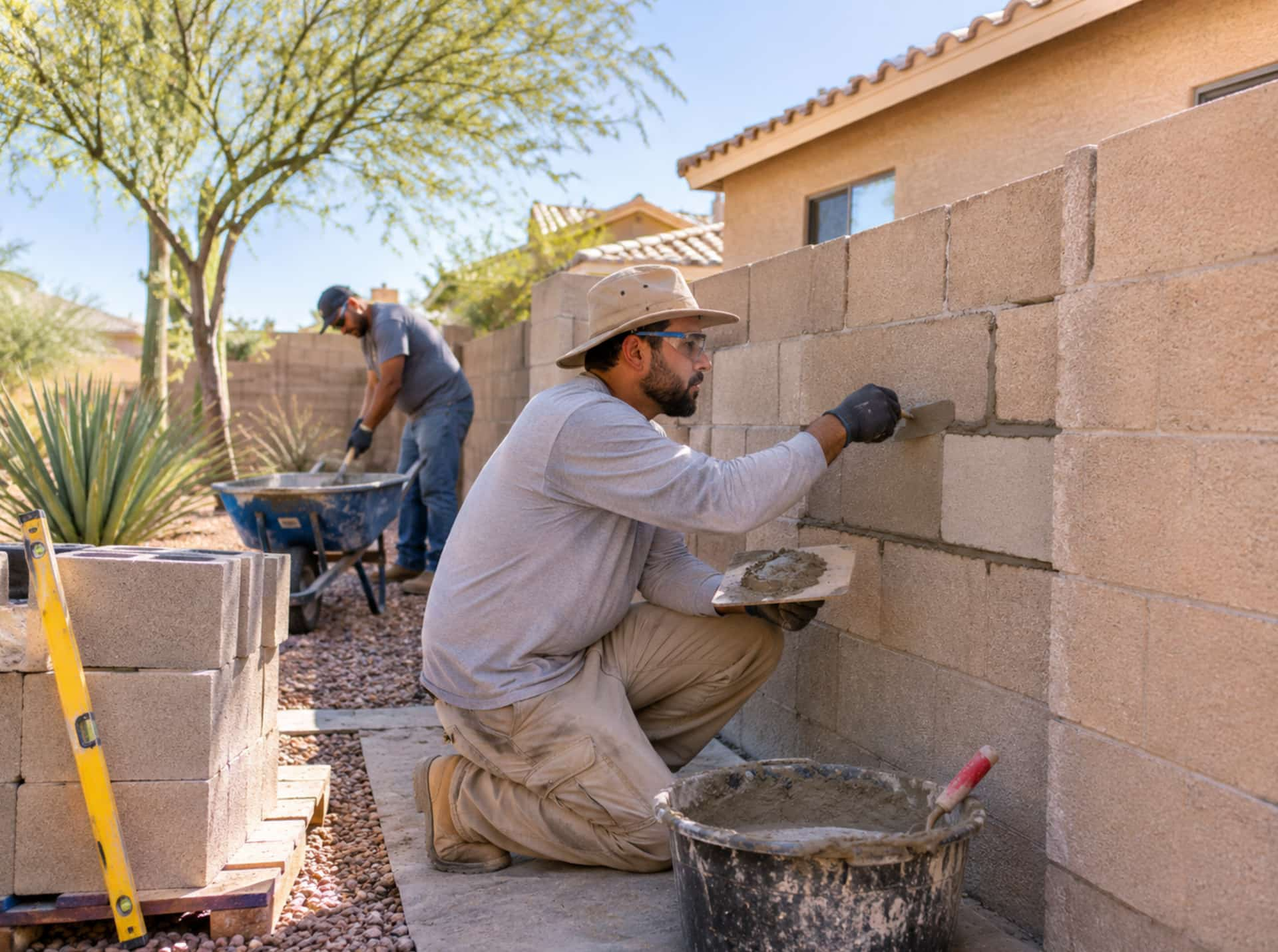
Signs Your Block Wall Needs Repair or Structural Attention
Situations where Buckeye homeowners and business owners request this specialized masonry work:
Across Buckeye, Tartesso, Verrado, and the greater West Valley, homeowners and commercial property developers frequently contact our crews when addressing changing property conditions, grade transitions, boundary security requirements, and outdoor living upgrades. Whether resolving steep yard elevation drops, building secure perimeter walls around swimming pools, or renovating weathered surfaces that no longer meet HOA standards, timely professional masonry ensures long-term structural protection.
Every property presents distinct physical demands. We systematically evaluate soil bearing capacity, property boundary pins, neighbor setbacks, and existing utility easements before designing the installation. By addressing underlying earth pressures, storm runoff flows, and local municipal standards up front, we deliver durable masonry and hardscape installations engineered to stand firm for decades.
Why Block Walls Crack, Lean, or Shift in Arizona
Specific soil, temperature, and atmospheric pressures unique to Maricopa County and the Sonoran Desert:
The Sonoran Desert environment subjects exterior masonry and hardscaping to exceptional physical stress. Extreme summer surface temperatures exceeding 140°F induce rapid thermal expansion across concrete, stone, and mortar assemblies, followed by swift nocturnal cooling that drives cyclic tension cracking. When unreinforced masonry panels lack expansion joints or proper footing embedment, this continuous thermal movement produces progressive joint separation and structural shear fractures.
Subsurface soil dynamics compound these environmental challenges. Buckeye sits on dense caliche hardpan and reactive expansive clays that swell dramatically when saturated by sudden summer monsoon downpours and shrink as they desiccate. Trapped hydrostatic water without engineered gravel backfills and perforated drain outlets multiplies lateral earth pressure behind walls, while unsealed footings experience differential upheaval that causes visible tilting, bowing, and foundation failure.
Buckeye Block Wall Repair Standards
Our structural remediation protocols ensure existing walls regain original load capacity without unsightly patchwork:
Shear Load Restoration
Tensile reinforcement returning cracked walls to 100% of their original structural wind and gravity rating.
Structural Grout Injection
High-flow non-shrink grout pumped into hollow cells to solidify compromised wall cores.
Plumb-Line Laser Realignment
Re-plumbing leaning wall sections within 1/8-inch tolerance across a 10-foot vertical span.
Mortar Color Matching
Formulated desert pigment blends ensuring restored joints visually match aged adjacent masonry.
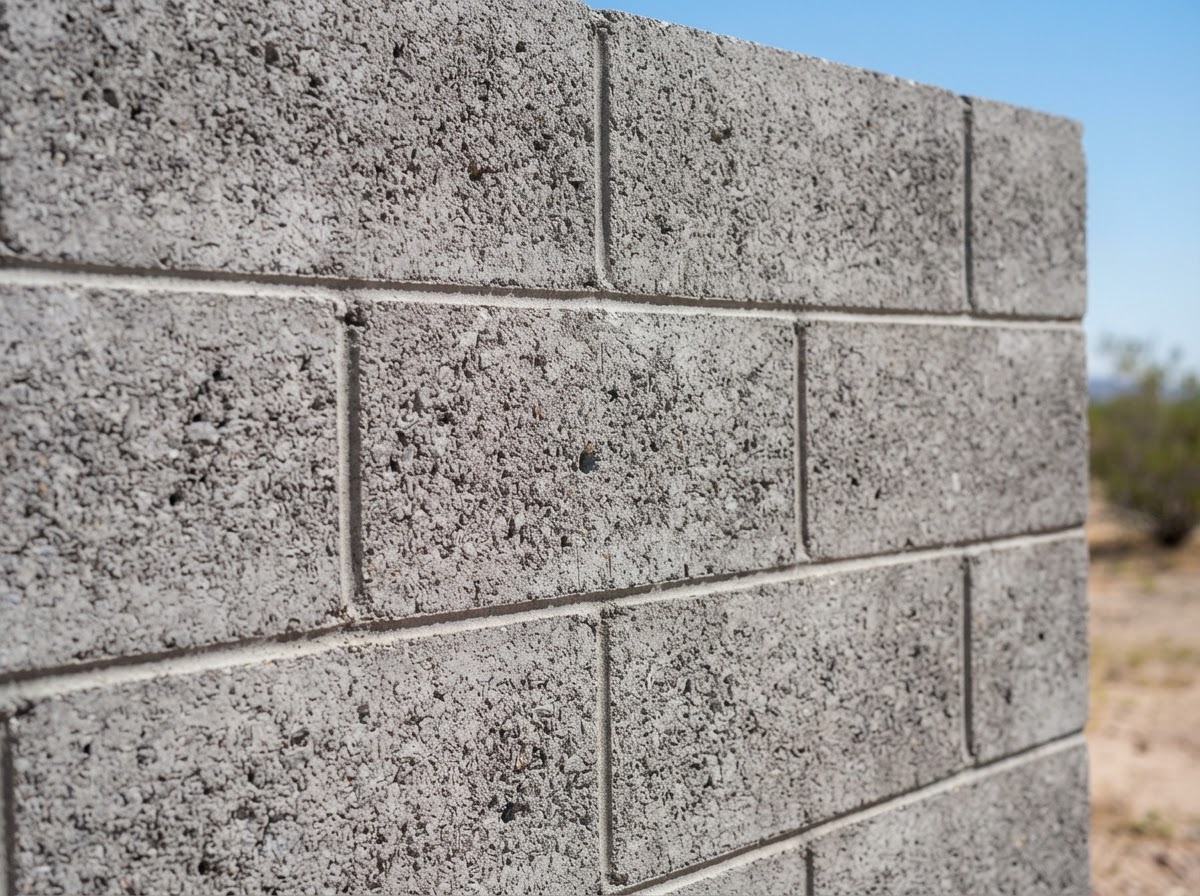
High-tensile stainless steel helical reinforcement bars chemically bonded across stepped fracture lines. Locks separating blocks together and halts seismic/settlement spread.
Restoration Materials & Repair Techniques
We never mask active structural movement with cheap cosmetic caulks. We utilize commercial-grade helical anchoring systems, polymer epoxies, and custom-blended Type S mortars engineered to endure Arizona heat.
How We Assess Structural Cracks and Stabilize Leaning Walls
Stair-Step Crack Diagnosis
Stair-step cracks that follow mortar joints almost always point to differential footing settlement. One section of the footing has dropped or heaved while the rest stayed put, forcing the rigid block to crack at its weakest path, the mortar.
Leaning Wall Stabilization
A wall leaning more than an inch out of plumb needs real intervention. We excavate behind the wall, relieve the soil pressure, plumb it back, and install deadman anchors or concrete buttresses tied into the footing to hold it for good.
Vehicle Impact Reconstruction
After a collision, we shore the damaged section to prevent collapse, remove shattered block, inspect the footing for hidden cracks, and rebuild with fresh CMU and rebar tied back into the sound wall on both sides.
Root & Moisture Damage Control
Desert trees like mesquite and eucalyptus push roots under footings and lift them. We cut the offending roots, repair the footing, and recommend drainage fixes so irrigation water stops pooling against the wall base.
How We Assess and Rebuild Damaged Block Wall Sections
Damage Analysis
Determining whether footing failure or lateral pressure caused the defect.
Site Shoring
Erecting temporary structural supports to prevent unexpected wall collapse.
Masonry Reconstruction
Removing shattered blocks, stitching cracks, or rebuilding failed sections.
Surface Blending
Tuckpointing mortar, applying patch stucco, and blending paint coats.
Why Arizona Block Walls Crack, Lean, and Fail
Reading the Cracks: What Your Wall Is Telling You
Not every crack means your wall is about to fall down, but every crack means something. A hairline crack in a single mortar joint is often just normal thermal movement. A stair-step crack that runs down through the mortar and across the block is a sign of footing settlement. A horizontal crack near the base usually means soil or water pressure is pushing the wall from behind. A wide, open crack that grows over time needs attention before the next monsoon.
The pattern tells us where to look. Vertical cracks near a corner often mean the corner footing has dropped. Cracks that widen at the top point to a footing problem at the bottom. When we inspect a wall, we use a laser level to check plumb and look for the story the cracks are telling. The repair plan follows directly from that diagnosis.
This is why simply filling a crack with caulk rarely works for long. The wall cracked because something underneath moved. Until that movement is addressed, the wall keeps moving, and the crack comes back, often in a new spot. A real repair fixes the cause first, then the visible damage.
Why So Many Older Buckeye Walls Are Leaning
A lot of the block walls built in Buckeye subdivisions in the 1990s and early 2000s were put up fast and cheap. Many have little or no vertical rebar. The footings were often poured shallow, above the caliche. Without steel tying the wall to the footing, there is nothing to resist lateral pressure. Add a decade of monsoon wind and soil movement, and the wall slowly tilts.
The fix depends on how far the wall has moved. A wall that is less than an inch out of plumb can often be stabilized in place. We install anchors or buttresses to stop further movement and address the drainage that caused it. A wall that has leaned several inches may need to be taken down and rebuilt on a proper footing with full reinforcement. We will give you an honest assessment of which path makes sense.
The key is catching the lean early. A wall that is slowly tipping will only get worse with each wet season. Stabilizing it now costs a fraction of what a full rebuild will cost after it collapses.
Repair vs. Replacement: How We Decide
Our goal is to save your wall whenever it makes sense. Targeted repair of a 10 to 30-foot damaged section, when the rest of the footing is solid, typically costs 50 to 70 percent less than a full wall replacement. We stitch the cracks, rebuild the failed section, and tie it back into the sound wall on both sides.
Full replacement becomes the better value when the failure is widespread. If more than 40 percent of the wall's run has footing damage, or if the entire wall was built without reinforcement and is failing throughout, rebuilding it right gives you a wall that will not need the same repair in five years. We will show you the numbers and let you decide.
For vehicle impact damage, the decision is usually clear. We rebuild the shattered section to match the rest, often working with your insurance company to document the damage and scope for the claim.
Stopping the Damage From Coming Back
A repair only lasts if the cause is gone. If a downspout dumps water against the footing, we fix the drainage. If irrigation overspray soaks the wall base, we redirect the heads. If a tree root lifted the footing, we address the root and the footing. These are small steps that prevent a repeat failure.
In Buckeye, the most common culprit is water. Expansive clay soil swells when wet and shrinks when dry. That cycle moves footings. Anything that concentrates water near a wall, a broken sprinkler line, a roof downspout with no extension, a low spot in the grade, will accelerate damage. We point these out during every repair estimate.
After the repair, a breathable sealant or elastomeric coating can help protect the wall from future water intrusion. It is an optional step, but one that extends the life of both the repair and the whole wall.
What Influences the Cost of Block Wall Repair
Repair investments depend strictly on the extent of underlying footing fracture, safety shoring requirements, and whether the repair involves a localized impact or progressive foundation settlement across long runs:
Related Concrete & Masonry Services
Why Trust Us for Block Wall Restoration
Repairing a damaged structural masonry wall demands far greater diagnostic expertise than laying new block. We resolve the root cause so your perimeter remains secure for decades.
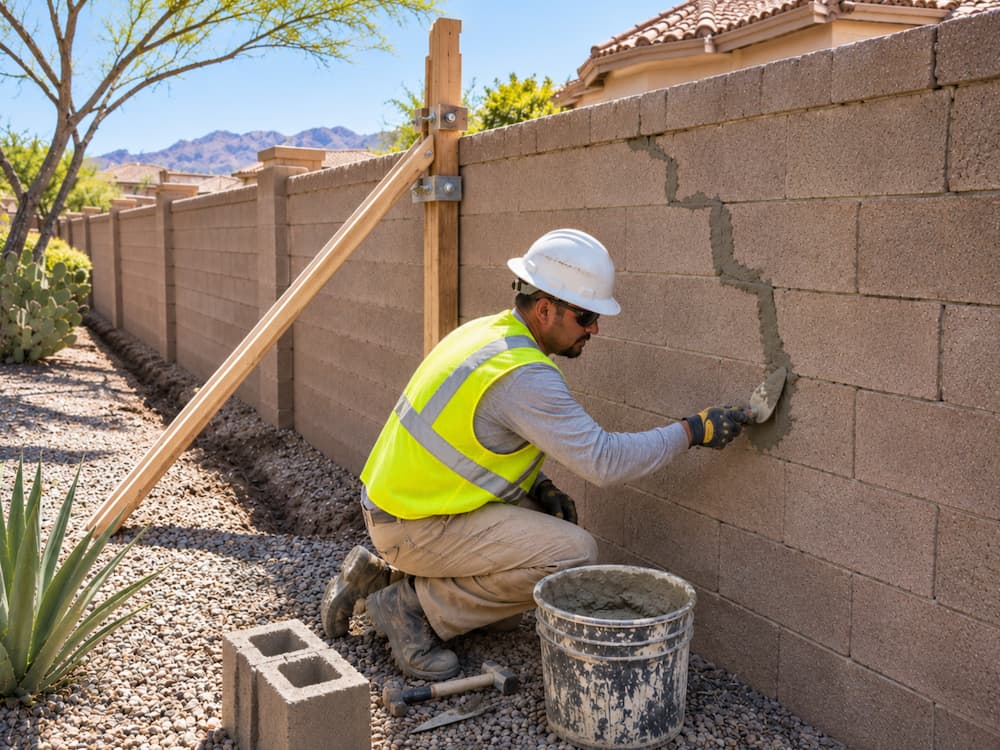
Frequently Asked Questions About Cinder Wall Repair in Buckeye, AZ
Practical, straightforward answers about costs, permits, repairs, and desert construction.
Q1.Can a leaning block wall in Buckeye, AZ be saved without tearing it down?
In many cases, yes. If the footing hasn't suffered complete catastrophic fracture, we can excavate one side, plumb the wall back into position, and install structural steel deadman anchors or concrete buttresses.
Q2.What causes stair-step cracks in block walls in Buckeye, AZ?
Stair-step cracks are caused by differential footing settlement, typically when desert clay soil heaves from excess water or settles under uneven loads.
Q3.How much does cinder wall repair cost in Buckeye, AZ?
Minor crack repairs and joint repointing typically start around $450 to $850, while rebuilding an impact-damaged 10 to 20 foot section generally ranges between $1,200 and $2,800.
Q4.Do you repair block walls damaged by car accidents in Buckeye, AZ?
Yes, as a foundation repair company, we frequently work with homeowners and insurance adjusters to provide emergency shoring, estimates, and complete masonry reconstruction following vehicular impacts.
Q5.Can tree roots crack a concrete block wall in Buckeye, AZ?
Yes, aggressive desert tree roots like eucalyptus, ficus, or mesquite can exert tremendous hydraulic force under footings, cracking both concrete and block courses.
Q6.How long does a typical block wall repair take?
Most residential crack stitching and section rebuilds take 1 to 2 days to complete.
Q7.Will the repair mortar match my existing wall?
We custom-tint our repair mortar and texture-match patch stucco to blend seamlessly with your weathered wall.
Q8.Are emergency cinder wall repairs available?
Yes, we respond promptly to hazardous or collapsed wall conditions to secure property boundaries and ensure safety.
Ready to Build or Repair Your Block Wall Repair?
Schedule an on-site consultation in Buckeye or anywhere in the West Valley for a clear, itemized proposal.