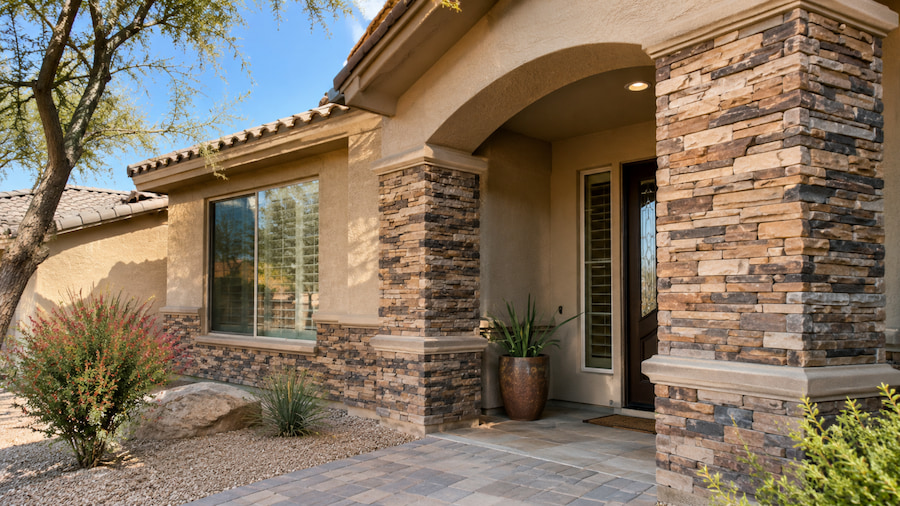
Stone Veneer Installation in Buckeye, Arizona — Add Warmth and Value to Your Home
Add rustic warmth and high-end architectural appeal with manufactured stone and natural thin rock veneer installed over concrete block walls, outdoor kitchens, and home facades.
Pricing Provided by Block Guys LLC
Stone veneer is one of the highest-impact upgrades a Buckeye homeowner can make to a property. It transforms a flat, grey concrete block wall into a textured architectural feature that reads as solid natural stone, instantly elevating curb appeal and perceived value. Whether applied to a front entry column, a courtyard accent wall, an outdoor kitchen, or a full home facade, veneer adds the kind of warmth and character that painted block and stucco simply cannot match.
But veneer is only as permanent as the bond behind it. In the Sonoran Desert, intense ultraviolet exposure, dramatic temperature swings between winter nights and summer afternoons, and monsoon moisture cycling put enormous stress on the mortar-to-stone interface. Veneer installed with the wrong thinset, inadequate lath, or spot-bonding techniques will begin to pop, crack, and fall off within just a few seasons, leaving an expensive and dangerous repair.
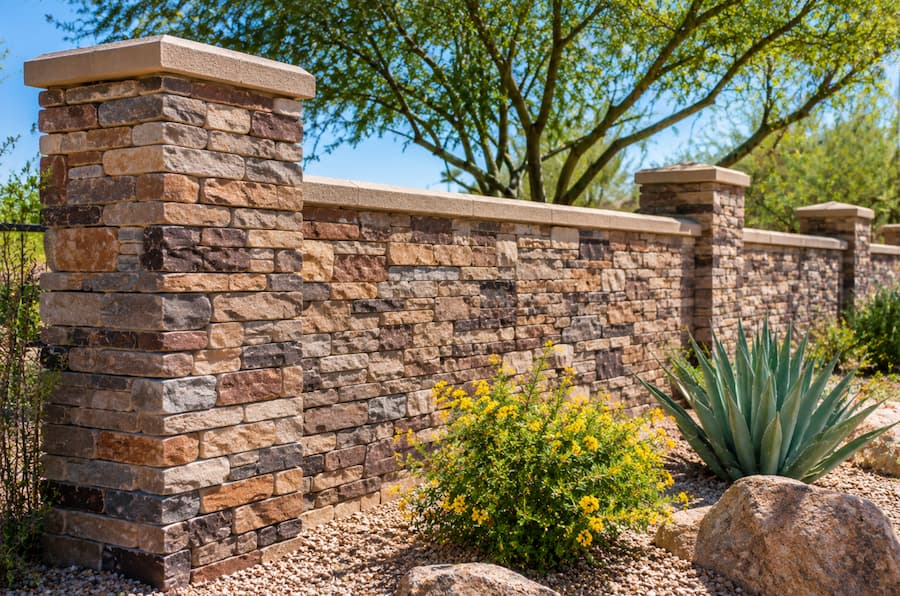
Buckeye Block Wall Contractors installs both manufactured cultured stone and natural thin-cut quarry stone using the full masonry bonding system: moisture barrier, galvanized metal lath, polymer-modified scratch coat, and 100% back-buttered setting mortar. Every stone is hand-fitted, color-blended across multiple boxes, and tooled to a consistent joint, so the finished wall looks like it was laid by a master stonemason rather than glued on in sheets.
What Makes Stone Veneer Installation Important for Long-Term Property Care?
From vapor barrier and metal lath prep to hand-fitted corner quoins and precision mortar joint tooling, we enhance residential facades with authentic stone textures.
Every stone veneer installation project we take on in Buckeye and the surrounding West Valley is treated as a complete build, not a quick patch. That means we handle the full scope from the ground up. Excavation, base preparation, structural reinforcement, and the final finish are all part of the same coordinated effort. You are never left coordinating multiple trades or guessing what comes next.
We start by walking your property with you. We listen to what you want the finished wall or outdoor space to accomplish. Then we point out conditions that could affect the build. Desert soil, drainage paths, property slopes, and neighboring structures all factor into how we plan the work. You get a clear explanation of what we will do, why we will do it that way, and what you can expect at each stage.
Materials are selected for Arizona conditions. We use high-strength block, properly graded aggregate base, Grade 60 steel reinforcement, and mortar mixed for hot-weather placement. Nothing is substituted to save a few dollars, because the desert punishes shortcuts. A wall or hardscape built right the first time saves you from costly repairs down the road.
Polymer-Modified Thinset Mortar,
Weather-Resistive Barriers & Corner Returns.
Installing manufactured or natural stone veneer on desert block walls demands high-bond modified mortars, clean mechanical keys, and proper joint sealing against wind-driven moisture.
Substrate Scarification & Scratch Coat
Applying diamond-etched or wire-lathed scratch coats to establish mechanical anchoring for heavy stone units.
ANSI A118.15 High-Tack Thinsets
Polymer-modified mortars delivering massive shear bond strength even under intense vertical wall weights.
100% Back-Buttered Coverage
Troweling mortar across the entire rear surface of every stone unit to eliminate hollow voids and moisture traps.
Mitered & Interlocking Corner Units
Installing authentic L-shaped corner returns giving the structural illusion of full-depth stone masonry.
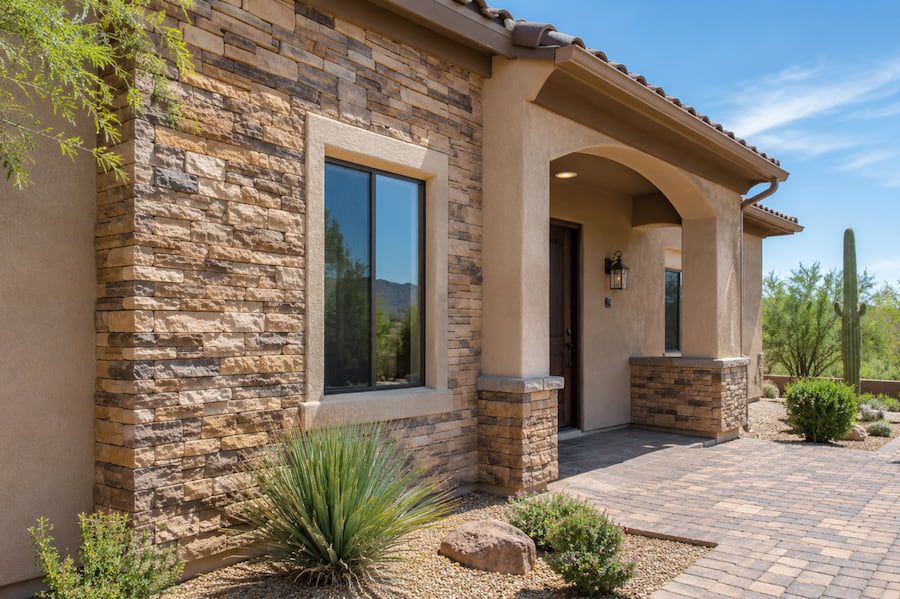
Enhancing Home Facades, Block Walls, and BBQ Islands With Stone Veneer
Situations where Buckeye homeowners and business owners request this specialized masonry work:
Across Buckeye, Tartesso, Verrado, and the greater West Valley, homeowners and commercial property developers frequently contact our crews when addressing changing property conditions, grade transitions, boundary security requirements, and outdoor living upgrades. Whether resolving steep yard elevation drops, building secure perimeter walls around swimming pools, or renovating weathered surfaces that no longer meet HOA standards, timely professional masonry ensures long-term structural protection.
Every property presents distinct physical demands. We systematically evaluate soil bearing capacity, property boundary pins, neighbor setbacks, and existing utility easements before designing the installation. By addressing underlying earth pressures, storm runoff flows, and local municipal standards up front, we deliver durable masonry and hardscape installations engineered to stand firm for decades.
Why Stone Veneer Pops Off Walls When Installed Without Proper Bonding
Specific soil, temperature, and atmospheric pressures unique to Maricopa County and the Sonoran Desert:
The Sonoran Desert environment subjects exterior masonry and hardscaping to exceptional physical stress. Extreme summer surface temperatures exceeding 140°F induce rapid thermal expansion across concrete, stone, and mortar assemblies, followed by swift nocturnal cooling that drives cyclic tension cracking. When unreinforced masonry panels lack expansion joints or proper footing embedment, this continuous thermal movement produces progressive joint separation and structural shear fractures.
Subsurface soil dynamics compound these environmental challenges. Buckeye sits on dense caliche hardpan and reactive expansive clays that swell dramatically when saturated by sudden summer monsoon downpours and shrink as they desiccate. Trapped hydrostatic water without engineered gravel backfills and perforated drain outlets multiplies lateral earth pressure behind walls, while unsealed footings experience differential upheaval that causes visible tilting, bowing, and foundation failure.
Stone Veneer Installation Standards
Elevating exterior privacy walls, columns, and home facades with rich natural and manufactured stone textures:
50+ lb/sq.ft. Bond Strength
Modified cementitious thinset exceeding all ANSI shear-bond standards for outdoor vertical stone.
Zero Hollow Spots
Full back-buttering guaranteeing complete mortar contact and preventing water freezing or expansion damage.
Natural Color Blending
Mixing stone pieces from multiple boxes simultaneously to ensure balanced, natural tone variation across walls.
Siloxane Penetrating Seal
Breathable water-repellent sealer protecting stone pores against dust stains and mineral discoloration.
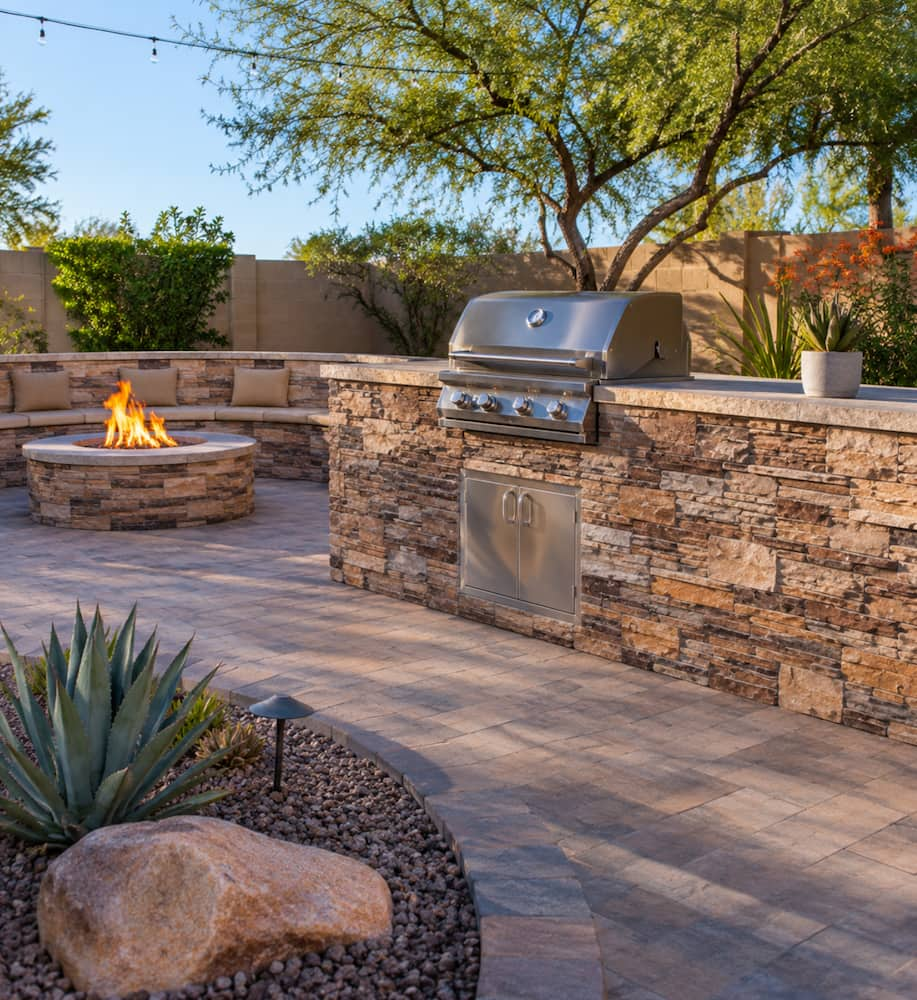
Veneer Profiles, Polymer Mortars & Lath Systems
We install Coronado, Cultured Stone, and natural quartzite thin-stone with polymer-modified Type S thinset and galvanized Diamond mesh lath for permanent adhesion.
Galvanized Wire Lath, Polymer-Modified Scratch Coats, and Quoin Corners
Galvanized Metal Lath Bonding System
Over painted, stuccoed, or framed substrates, we mechanically fasten 3.4 lb galvanized diamond metal lath with masonry nails and washers. This creates a mechanical key for the scratch coat so the veneer is anchored structurally, not just chemically bonded.
Polymer-Modified Scratch Coat
We trowel a polymer-fortified Type S scratch coat through the lath, fully embedding the mesh and creating a rough, grooved surface. The polymer additive adds flexibility and bond strength that plain cement mortar cannot achieve under desert thermal cycling.
100% Back-Buttered Stone Setting
Every veneer unit is back-buttered with full mortar coverage, never spot-bonded with mortar 'donuts.' Full coverage eliminates hollow moisture pockets behind stones where monsoon water can collect, freeze-thaw, and pry the stone loose.
Breathable Siloxane Sealer
After curing, we apply a penetrating siloxane water repellent that lets trapped vapor escape while blocking liquid monsoon rain from wicking into the stone and mortar, preventing efflorescence and freeze-thaw spalling.
How We Prep, Lath, and Hand-Fit Architectural Stone Veneer
Lath & Scratch
Fastening metal lath and applying polymer scratch coat.
Stone Staging
Blending stone sizes, shapes, and color gradients from multiple boxes.
Back-Buttering
Applying 100% mortar coverage to stone backs for permanent bond.
Joint Tooling
Grout piping and striking joints or executing dry-stack precision fits.
Installing Stone Veneer That Never Loosens in Desert Heat
Manufactured Stone vs. Natural Thin Stone Veneer
Manufactured stone, also called cultured stone, is cast from lightweight concrete in molds taken from real rock faces. It is roughly half the weight of natural stone, costs less to ship and install, and offers consistent, repeatable shapes and color blends. Brands like Coronado and Cultured Stone produce dozens of profiles, from dry-stack ledgestone to rounded river rock, giving you broad design flexibility for a Buckeye home.
Natural thin stone veneer is sawn directly from real quarried rock, sliced to roughly one inch thick. It carries the authentic color variation, mineral veining, and tactile texture that only genuine geological stone can provide. Natural stone costs more and is heavier, but it will never fade, and many homeowners choose it for high-visibility feature walls and entry columns where authenticity matters most.
Why Stone Veneer Pops Off Walls in the Arizona Desert
The most common cause of veneer failure in Buckeye is improper bonding. Installers who use standard tile thinset, or who spot-bond stones with a few dabs of mortar, create hollow voids behind each unit. Monsoon moisture migrates into those voids, and the intense daily temperature swings cause the stone and mortar to expand and contract at different rates. Within a few seasons, the bond fails and stones begin to drop.
Our system eliminates this failure mode entirely. The galvanized lath gives the scratch coat a mechanical anchor to the wall, the polymer-modified mortar adds flexibility to absorb thermal movement, and 100% back-buttering removes every hollow pocket. The result is a veneer wall that stays solidly bonded for decades, even under direct desert sun and monsoon rain.
Substrate Preparation: Block, Stucco, and Framed Walls
Veneer can be installed over several substrates, and each requires different preparation. Over clean, unpainted concrete block, we can bond the scratch coat directly to the masonry surface after a thorough pressure wash. Over painted or stuccoed walls, we must mechanically fasten metal lath because paint and stucco form a weak bond layer that will delaminate under the veneer weight.
Over wood or steel-framed walls, we install a weather-resistive vapor barrier, then fasten lath over the studs. This is common for home entry accent walls and outdoor kitchen islands. Getting the substrate right is the single most important step in veneer work, because no amount of beautiful stone can compensate for a wall that was not properly prepared to hold it.
Design Details: Corner Quoins, Sills, and Joint Styles
The details separate a professional veneer installation from an amateur one. We hand-fit corner pieces, called quoins, around every 90-degree outside corner so the stone wraps naturally and reads as a solid mass rather than a flat panel with edges. We blend stones from multiple boxes at once to avoid noticeable color banding, and we vary stone sizes and shapes to create a natural, random pattern.
Joint style dramatically changes the finished look. A dry-stack ledgestone profile has no visible mortar, creating a tight, contemporary stone face. A jointed fieldstone profile uses a grout bag to pipe mortar between stones, then strikes the joints to a consistent depth for a more traditional, rustic appearance. We help you choose the profile and joint style that best matches your home's architecture and the surrounding Buckeye landscape.
What Determines Stone Veneer Installation Costs
Wall square footage, stone style (dry-stack ledgestone vs jointed fieldstone), substrate preparation over existing stucco, and corner piece linear footage drive pricing:
Related Concrete & Masonry Services
Why Choose Our Stone Veneer Artisans in Buckeye
Poor veneer installation causes stones to fall off under Arizona summer heat. We back-butter 100% of each unit and use reinforced scratch coats to guarantee permanent bonding.
Frequently Asked Questions About Stone Veneer in Buckeye, AZ
Practical, straightforward answers about costs, permits, repairs, and desert construction.
Q1.Can stone veneer be installed directly over block walls in Buckeye, AZ?
Yes, when concrete block walls are clean and unpainted, stone veneer can be bonded directly with polymer-modified masonry mortar.
Q2.What is the difference between manufactured stone and natural stone veneer in Buckeye, AZ?
Manufactured stone is cast from lightweight concrete molds mimicking natural rock, offering lower weight and consistent shapes. Natural thin stone is cut directly from real quarry stone, offering unmatched authentic color variation.
Q3.Does stone veneer fade in Buckeye, AZ sunlight?
Quality manufactured stone uses iron oxide mineral pigments that resist fading, while natural stone will never fade under desert sunlight.
Q4.How much does stone veneer cost per square foot in Buckeye, AZ?
Installed stone veneer typically ranges from $18 to $32 per square foot depending on stone selection and corner complexity.
Q5.Can stone veneer handle monsoon rains in Buckeye, AZ?
Yes, when installed with proper weather-resistive barriers and scratch coats, stone veneer provides excellent weather resistance.
Q6.Can you install stone veneer on an outdoor fireplace?
Yes, stone veneer is non-combustible and the preferred decorative finish for outdoor fireplaces and BBQ islands.
Q7.How long does stone veneer last?
Properly installed stone veneer lasts for 50+ years with virtually no maintenance.
Q8.Are estimates free for stone veneer?
Yes, we provide free in-person estimates with stone sample boards to help you choose the ideal profile.
Ready to Build or Repair Your Stone Veneer Installation?
Schedule an on-site consultation in Buckeye or anywhere in the West Valley for a clear, itemized proposal.