
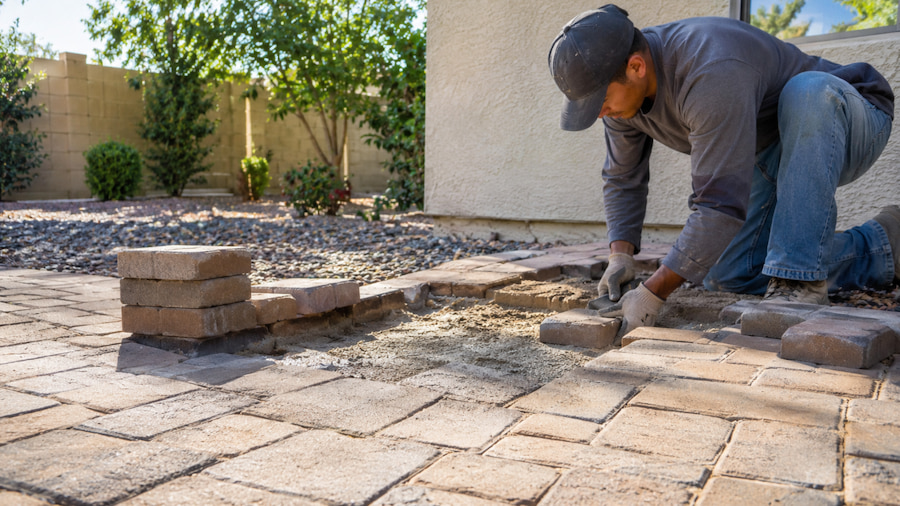
Paver Repair in Buckeye, Arizona That Levels Sunken Pavers and Restores a Safe Surface
Sunken pavers lifted, bases re-compacted, edge restraints replaced, and joints re-sanded. We fix trip hazards, wobbly pavers, and weed-filled joints without replacing your whole patio or driveway.
Pricing Provided by Block Guys LLC
Pavers are one of the few paved surfaces you can actually repair. Unlike concrete, which cracks and stays cracked, pavers can be lifted, fixed, and put back. That is one of their biggest advantages. But it only helps if you actually do the repair when problems show up.
The most common paver problem in Buckeye is settling. A section of pavers sinks down, creating a dip or a trip hazard. This happens when the base underneath was not compacted enough, or when water gets under the pavers and washes the base away. It can also happen where a utility trench was dug and the backfill settled over time.
Other common problems are loose pavers at the edges, where the edge restraint has failed, and joints full of weeds or missing sand, where the joint sand has washed out. None of these problems mean your paver surface is ruined. They mean it needs repair. And repair is a fraction of the cost of replacement.
Buckeye Block Wall Contractors does paver repair across the West Valley. We lift the affected pavers, fix the base, reset the pavers, and lock the joints. The repair blends in with the surrounding surface, and your patio or driveway is back to solid and safe.
Common Property Issues That Paver Repair Helps Address
We lift sunken pavers, remediate failing base gravels, rebuild compromised edge restraints, re-level the field, and lock joints with fresh polymeric sand.
Every paver repair project we take on in Buckeye and the surrounding West Valley is treated as a complete build, not a quick patch. That means we handle the full scope from the ground up. Excavation, base preparation, structural reinforcement, and the final finish are all part of the same coordinated effort. You are never left coordinating multiple trades or guessing what comes next.
We start by walking your property with you. We listen to what you want the finished wall or outdoor space to accomplish. Then we point out conditions that could affect the build. Desert soil, drainage paths, property slopes, and neighboring structures all factor into how we plan the work. You get a clear explanation of what we will do, why we will do it that way, and what you can expect at each stage.
Materials are selected for Arizona conditions. We use high-strength block, properly graded aggregate base, Grade 60 steel reinforcement, and mortar mixed for hot-weather placement. Nothing is substituted to save a few dollars, because the desert punishes shortcuts. A wall or hardscape built right the first time saves you from costly repairs down the road.
Sunken Paver Resetting,
Edge Restraint Repair & Re-Sanding.
Sunken, uneven, or weed-infested paver surfaces indicate base failure or washed-out joint sand. We extract affected sections, re-compact subgrades, and restore original flush profiles.
Selective Extraction & Numbering
Carefully lifting settled pavers without chipping edges and staging them for reinstallation.
Subgrade Compaction & Bedding Releveling
Excavating settled pockets, packing fresh crushed aggregate, and screeding bedding sand to laser elevations.
Cracked Edge Restraint Re-Pouring
Chipping out broken plastic or concrete edging and placing reinforced concrete haunch restraints.
Power Sweep Polymeric Re-Sanding
Pressure washing old dirty joint sand and packing fresh polymeric sand to eliminate weeds and ant nests.
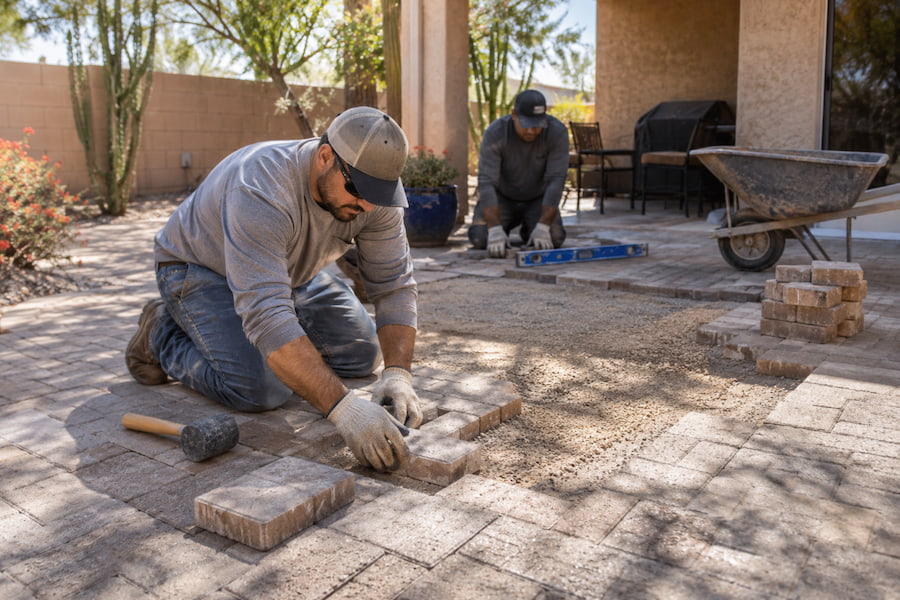
Common Paver Problems: Sunken Areas, Loose Edges, and Weeds
Situations where Buckeye homeowners and business owners request this specialized masonry work:
Across Buckeye, Tartesso, Verrado, and the greater West Valley, homeowners and commercial property developers frequently contact our crews when addressing changing property conditions, grade transitions, boundary security requirements, and outdoor living upgrades. Whether resolving steep yard elevation drops, building secure perimeter walls around swimming pools, or renovating weathered surfaces that no longer meet HOA standards, timely professional masonry ensures long-term structural protection.
Every property presents distinct physical demands. We systematically evaluate soil bearing capacity, property boundary pins, neighbor setbacks, and existing utility easements before designing the installation. By addressing underlying earth pressures, storm runoff flows, and local municipal standards up front, we deliver durable masonry and hardscape installations engineered to stand firm for decades.
What Causes Pavers to Sink, Shift, or Splay Open
Specific soil, temperature, and atmospheric pressures unique to Maricopa County and the Sonoran Desert:
The Sonoran Desert environment subjects exterior masonry and hardscaping to exceptional physical stress. Extreme summer surface temperatures exceeding 140°F induce rapid thermal expansion across concrete, stone, and mortar assemblies, followed by swift nocturnal cooling that drives cyclic tension cracking. When unreinforced masonry panels lack expansion joints or proper footing embedment, this continuous thermal movement produces progressive joint separation and structural shear fractures.
Subsurface soil dynamics compound these environmental challenges. Buckeye sits on dense caliche hardpan and reactive expansive clays that swell dramatically when saturated by sudden summer monsoon downpours and shrink as they desiccate. Trapped hydrostatic water without engineered gravel backfills and perforated drain outlets multiplies lateral earth pressure behind walls, while unsealed footings experience differential upheaval that causes visible tilting, bowing, and foundation failure.
Paver Repair & Releveling Standards
Restoring sunken, loose, or shifting paver surfaces back to safe, level, pristine condition:
Flush Elevation Alignment
Eliminating all tripping ledges and step-downs between repaired sections and existing patio planes.
Compacted Sub-Base Remediation
Addressing the underlying settling cause—irrigation leaks, plumbing trenches, or poor original compaction.
Anti-Washout Polymeric Sand
Deep joint lock resisting heavy backyard hose-downs and intense monsoon downpours.
Deep Clean & Seal Restoration
Optional deep cleaning and color-enhancing sealant bringing faded older pavers back to vibrant life.
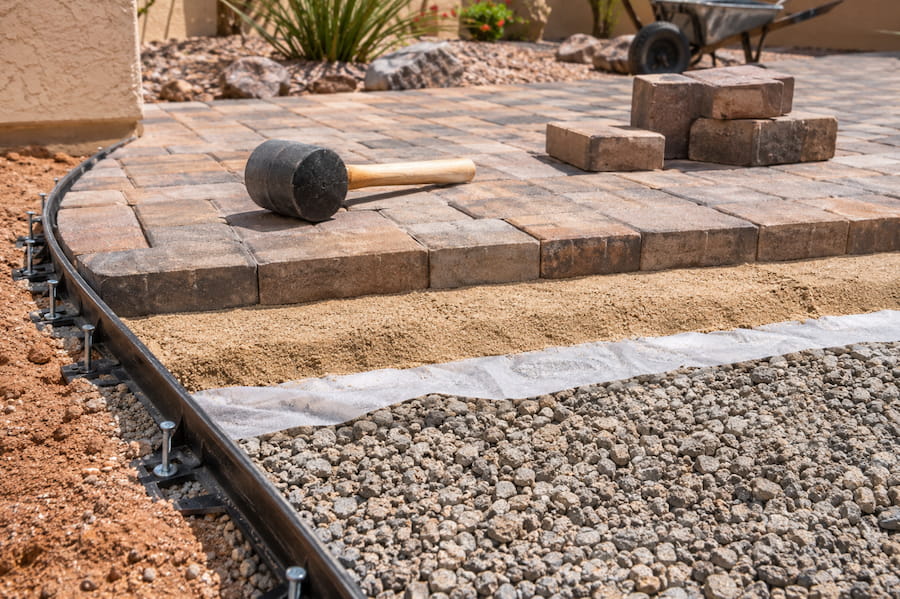
Leveling Aggregates, Edge Restraints & Joint Stabilizers
We use angular bedding sands, geotextile sub-base separation fabric, commercial-grade spiked edge restraints, and UV-stabilized polymeric sands to restore paver interlock.
Lift-and-Relevel Techniques, Sub-Base Repair, and Polymeric Sanding
Why Pavers Settle
Pavers settle when the base underneath compacts further over time. This happens when the base was not compacted in lifts during the original install, or when water gets under the pavers and washes base material away.
Lift, Fix, Reset
The repair is simple in concept. We lift the sunken pavers, add and compact base material to bring the grade back up, and reset the pavers. The pavers go back in the same spot, so the repair blends in.
Edge Restraint Failure
When pavers spread at the edges, the edge restraint has failed or was never installed. We replace it and spike it into the base, which locks the field and stops the spreading.
Joint Sand Washout
Plain sand washes out in monsoon rains. We re-sand with polymeric sand, which hardens when activated with water, locking the pavers and sealing the joints against future washout and weeds.
How We Lift, Level, and Re-Anchor Sunken Pavers
Lift Pavers
Removing the sunken or loose pavers and setting them aside.
Fix Base
Adding and compacting base material to restore the grade.
Reset Pavers
Setting the pavers back level and replacing edge restraints.
Lock Joints
Sweeping and activating polymeric sand to lock the field.
Why Paver Patios & Driveways Sink and How We Fix Them
Why Pavers Settle and How We Fix It
Settling is the number one paver problem we see in Buckeye. You notice it as a dip in the patio, a wobble underfoot, or a trip hazard on the walkway. The pavers themselves are fine. The problem is underneath them. The base has compacted further, or washed away, and the pavers followed it down.
This usually points to the original installation. If the base was not compacted in layers, or was not deep enough for the load, it settles over time. It can also happen where a utility trench was dug and the backfill was not compacted properly. The backfill settles over a few years, and the pavers on top sink with it.
The fix is the same either way. We lift the sunken pavers and set them aside. We add base material and compact it in layers until the grade is back where it should be. Then we reset the same pavers, level them, and lock the joints. The pavers go back in the same spot, so the repair is invisible. Your surface is flat and solid again, without replacing the whole thing.
Edge Restraints: Why Pavers Spread
If the pavers at the edge of your patio or driveway are loose, wobbly, or have gaps between them, the edge restraint has failed. The edge restraint is the hidden border that holds the paver field tight. Without it, the pavers push outward under weight and open up.
This is a common problem on older installations or on driveways where the restraint was not strong enough for the load. The good news is it is fixable. We lift the edge pavers, install a new concrete or aluminum edge restraint, and spike it into the compacted base. Then we reset the pavers tight against it.
Once the restraint is back and the joints are re-sanded, the field is locked again. The pavers stop spreading, the gaps close, and the edge is solid. This is one of the most common repairs we do, and it adds years to the life of your paver surface.
Joint Sand: Stopping Weeds and Washout
The joints between pavers are supposed to be full of sand. That sand is what locks the pavers together and keeps them from rocking. Over time, and especially after monsoon rains, the sand can wash out. When it does, the pavers get loose, weeds grow in the empty joints, and ants can dig through them.
The fix is to re-sand the joints. But we do not use plain sand, because it will just wash out again. We use polymeric sand, which has a binder in it. After we sweep it into the joints and wet it, the sand hardens. It locks the pavers together, seals the joints against water, and stops weeds and ants.
Re-sanding is a maintenance job that makes a big difference. If your joints are full of weeds or the sand is gone, re-sanding brings the surface back to tight and solid. It is a fraction of the cost of replacement and it fixes the most visible sign of an aging paver surface.
When to Repair vs. Replace Pavers
The advantage of pavers is that you almost never have to replace the whole surface. If one section settles, you lift that section. If a few pavers crack or stain, you swap them out. If the edges spread, you fix the restraints. The rest of the surface stays. That is the whole point of pavers.
There are times when replacement makes more sense. If the base has failed across most of the surface, lifting and resetting every paver costs almost as much as starting over. If the pavers themselves are badly faded, cracked, or you want a new look, replacement is the better choice. But for isolated settling, loose edges, and washed-out joints, repair is the right call.
If you are not sure, that is what the free estimate is for. We come out, look at the surface, and tell you honestly whether a repair will hold or whether the base is too far gone. Most of the time, a targeted repair is all you need, and it costs a fraction of replacement. We will not sell you a full replacement if a repair will solve the problem.
Factors Influencing the Cost of Paver Repair
Square footage of sunken areas, tree root intrusion, extent of missing edge restraints, and need for pressure washing and polymeric sand re-application drive the estimate:
Related Concrete & Masonry Services
Why Buckeye Homeowners Trust Us for Paver Restoration
Re-leveling pavers correctly requires addressing what caused the settlement underneath. We fix the foundation so your patio or driveway stays flat and safe.
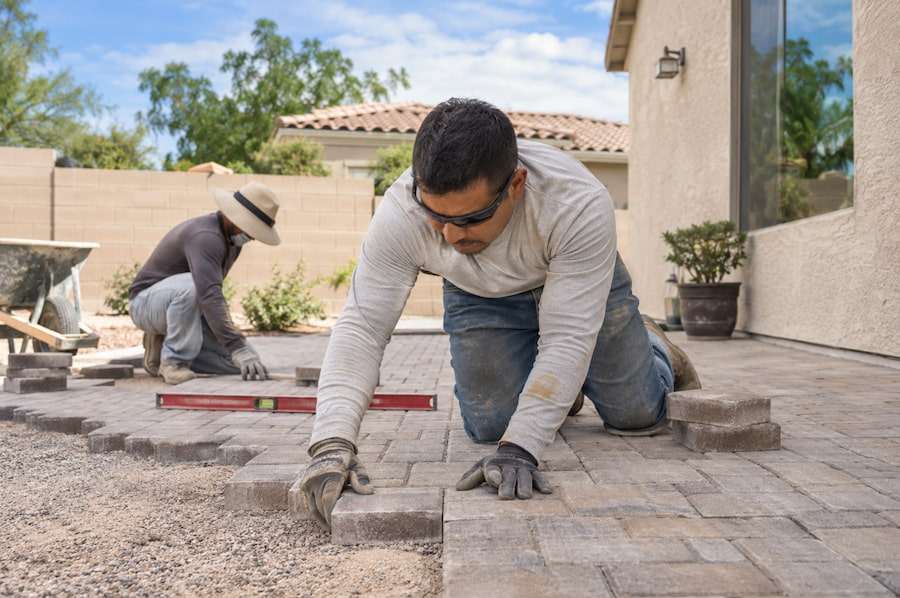
Frequently Asked Questions About Paver Repair in Buckeye, AZ
Practical, straightforward answers about costs, permits, repairs, and desert construction.
Q1.Can sunken pavers be fixed without replacing them in Buckeye, AZ?
Yes. We lift the sunken pavers, re-compact the base, and reset the same pavers level. The repair blends in because the original pavers go back in place.
Q2.Why are my pavers loose at the edges in Buckeye, AZ?
The edge restraint has failed or was never installed. We replace it and spike it into the base, which locks the field and stops the spreading.
Q3.How do I stop weeds from growing in my paver joints in Buckeye, AZ?
Weeds grow when the joint sand has washed out. Re-sanding with polymeric sand fills the joints, hardens, and stops weeds, ants, and washout.
Q4.How much does paver repair cost in Buckeye, AZ?
Most targeted paver repairs run a fraction of replacement cost. The price depends on the area affected, the base work needed, and whether restraints need replacing.
Q5.How long does a paver repair take in Buckeye, AZ?
Most paver repairs are completed in one to two days, depending on the size of the area and the extent of the base work.
Q6.Can you replace just a few cracked pavers?
Yes. We can swap out cracked or stained pavers with matching units. If you have spare pavers from the original install, we use those for an exact match.
Q7.Will the repaired area match the rest of my patio?
Yes. We reset the same pavers in the same spot, so the repair blends in with the surrounding surface.
Q8.Is paver repair covered by a warranty?
Yes, our paver repair work is backed by our Arizona ROC #354592 license and warranty coverage.
Ready to Build or Repair Your Paver Repair?
Schedule an on-site consultation in Buckeye or anywhere in the West Valley for a clear, itemized proposal.